Introduction: Why Open Layout Living and Dining Rooms Are So Popular
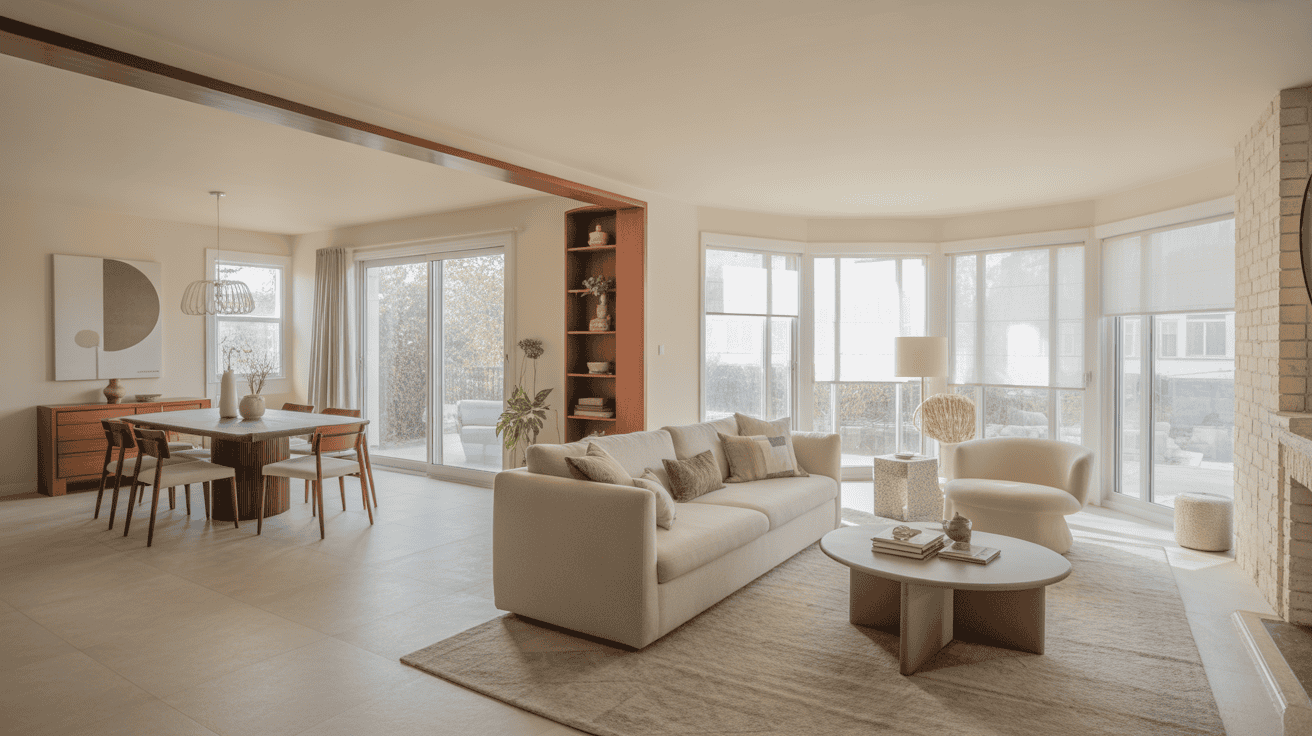
Open layout living and dining rooms have become a defining feature of modern home design. By removing walls and barriers, these layouts create a seamless connection between everyday living and dining spaces, making homes feel more open, inviting, and functional. This design approach is especially popular in contemporary homes where comfort and flexibility matter most.
One of the biggest advantages of an open layout is improved flow. Moving freely between the living room and dining area feels natural, whether you’re entertaining guests or spending time with family. Large windows and open sightlines allow natural light to travel throughout the space, creating a brighter and more spacious atmosphere that instantly elevates the overall look of the home.
Open layout living and dining rooms are also highly multifunctional. They adapt easily to different lifestyles—perfect for hosting gatherings, working from home, or relaxing without feeling confined. Beyond daily comfort, these layouts add visual appeal and increase home value by making interiors feel larger, modern, and thoughtfully designed.
1. Seamless Living–Dining Connection
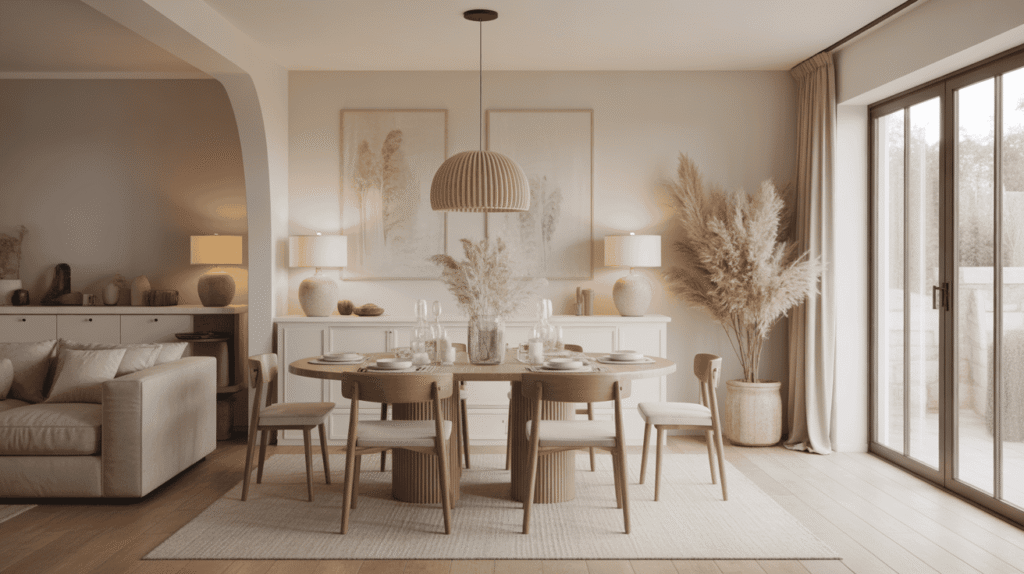
A seamless living–dining connection is the foundation of a successful open layout. Instead of walls, visual continuity ties both areas together, making the space feel larger and more cohesive. Using consistent flooring, a unified color palette, and complementary furniture styles helps create harmony without sacrificing functionality.
This design works especially well for entertaining, as conversations and movement flow naturally between the living and dining zones. Subtle zoning like an area rug under the sofa or a statement dining table defines each space while maintaining an open, airy feel. The result is a balanced layout that feels both stylish and practical for everyday living.
2. Smart Furniture Placement for Clear Flow
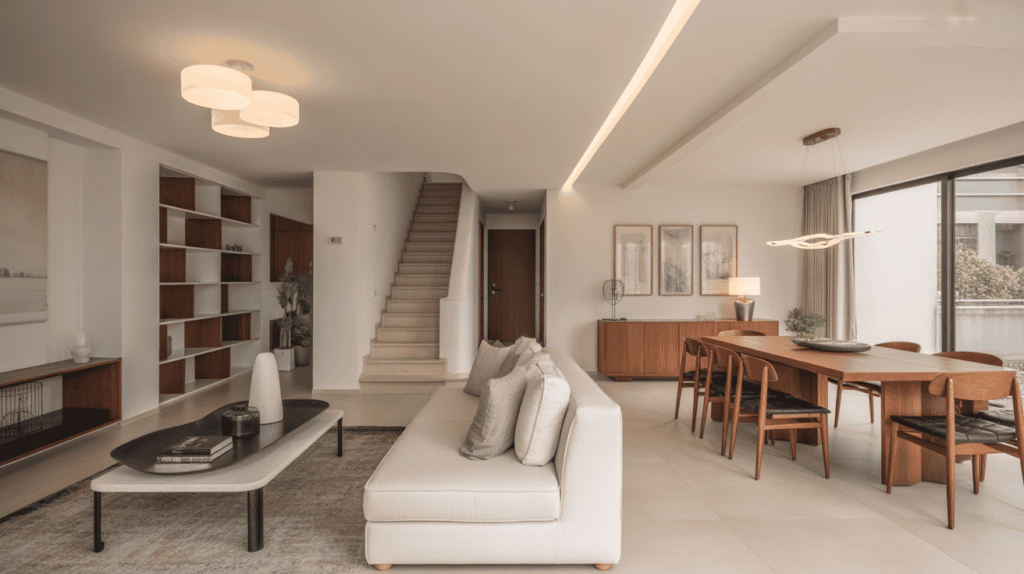
In an open layout living room and dining room, furniture placement plays a key role in maintaining a smooth flow. Instead of pushing everything against walls, thoughtfully arranged sofas, chairs, and tables help guide movement through the space while clearly defining each area.
Positioning a sofa with its back toward the dining area or using a console table as a divider creates structure without blocking openness. Choosing furniture with clean lines and appropriate scale prevents the room from feeling crowded, ensuring the layout stays functional, comfortable, and visually balanced.
3. Use Rugs to Define Separate Zones
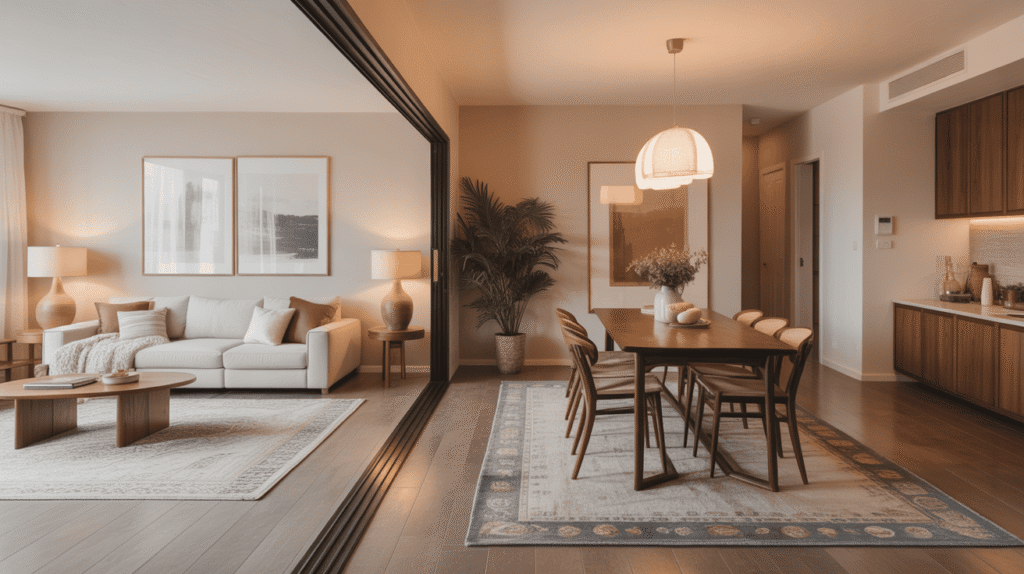
Rugs are one of the easiest and most stylish ways to create visual separation in an open layout living room and dining room. A well-placed area rug helps anchor the seating area, while a separate rug under the dining table clearly defines the dining zone without adding physical barriers.
Choosing rugs with complementary colors, textures, or patterns keeps the overall design cohesive. This zoning technique adds warmth, comfort, and structure, making the open space feel intentional, organized, and inviting rather than undefined.
4. Choose Cohesive Furniture Styles
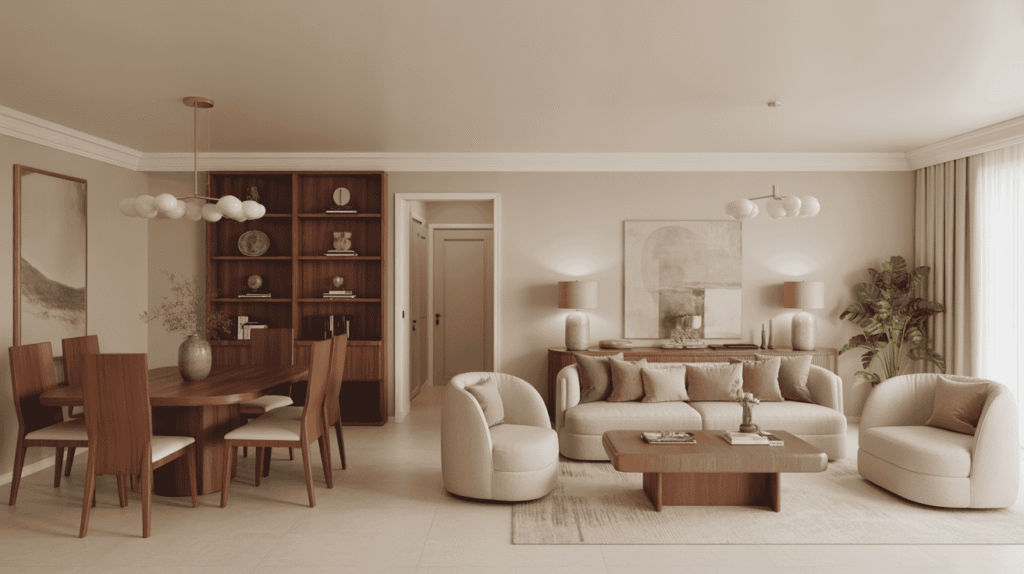
In an open layout living room and dining room, furniture plays a key role in creating visual harmony. Selecting pieces that share similar design elements—such as matching wood tones, metal finishes, or upholstery colors—helps both areas feel connected rather than mismatched.
You don’t need identical furniture, but a consistent style (modern, minimal, Scandinavian, or contemporary) keeps the space balanced. Cohesive furniture choices enhance flow, improve aesthetics, and make the open layout feel thoughtfully designed and polished.
5. Use Area Rugs to Define Each Space
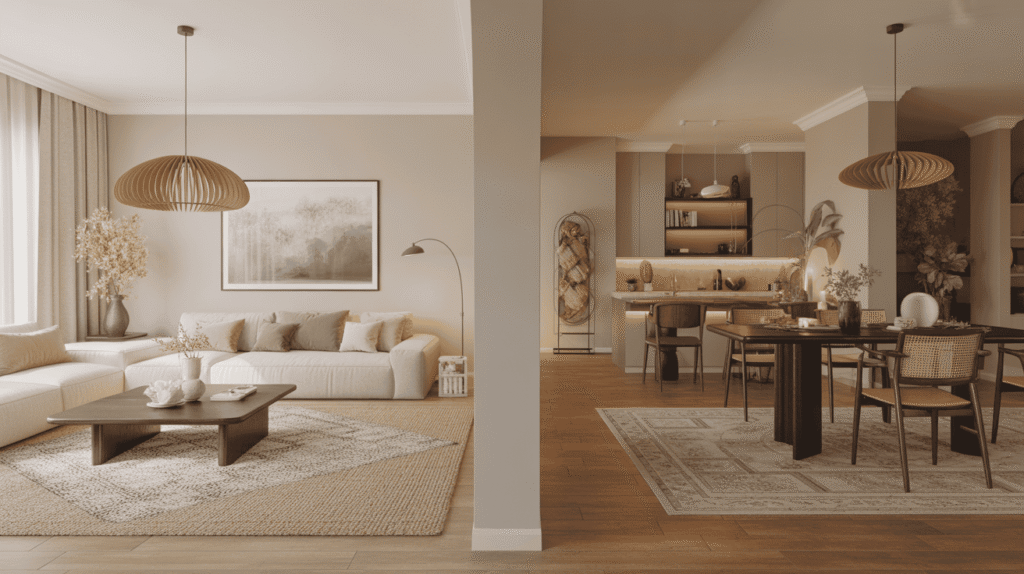
Area rugs are one of the easiest ways to visually separate the living room and dining room within an open layout. Placing a rug under the sofa arrangement and another beneath the dining table clearly defines each zone without blocking the open flow.
Choose rugs that complement each other through similar colors or patterns to maintain cohesion. This approach adds warmth, texture, and structure while keeping the space open, stylish, and well-organized.
6. Create Visual Balance With Lighting
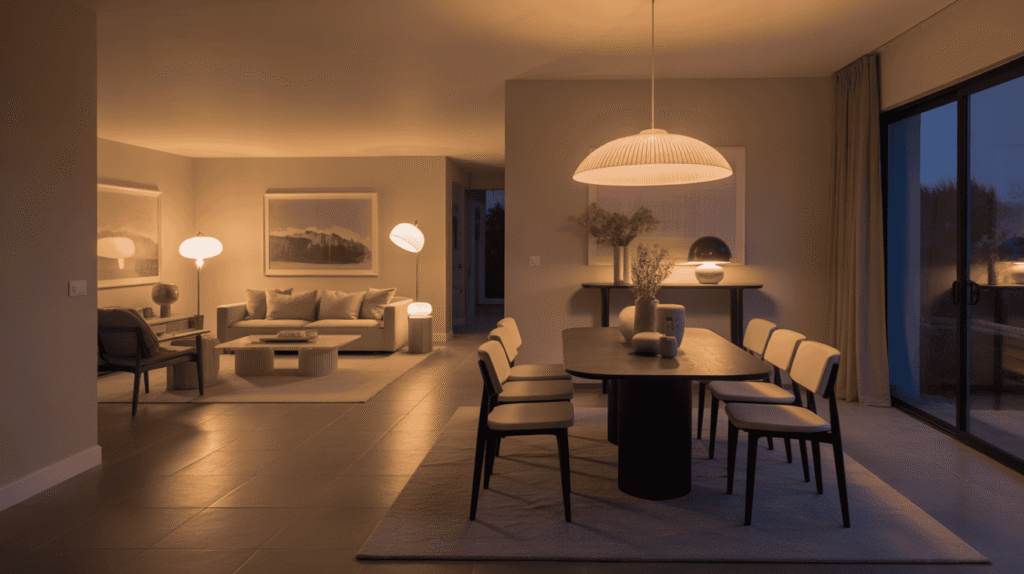
Lighting plays a key role in defining an open layout living room and dining room while maintaining harmony. Use different light fixtures for each area, such as a statement chandelier or pendant light over the dining table and softer ambient lighting like floor lamps or recessed lights in the living space.
Keep finishes and styles coordinated to avoid visual clutter. Balanced lighting enhances functionality, sets the mood for each zone, and adds a polished, well-designed look to the open layout.
7. Keep a Cohesive Color Palette
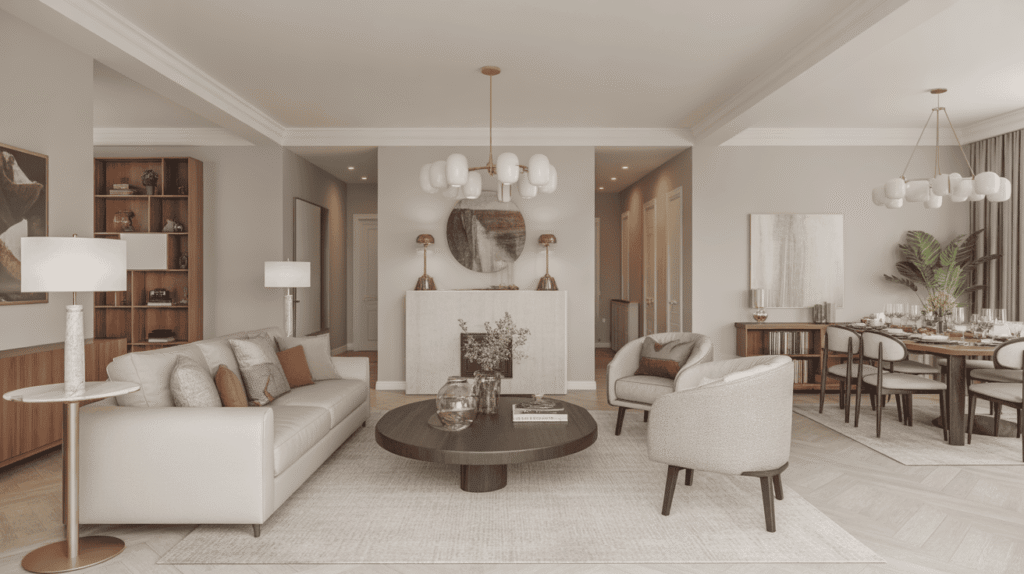
A cohesive color palette helps an open layout living room and dining room feel unified and intentional. Using consistent base colors—such as soft neutrals or warm earth tones—across walls, furniture, and décor creates visual flow while allowing each space to feel connected.
You can still add subtle contrast through textures, accent pieces, or artwork to avoid a flat look. This approach keeps the open layout calm, balanced, and visually pleasing while enhancing the spacious feel.
8. Add Statement Décor for Visual Interest
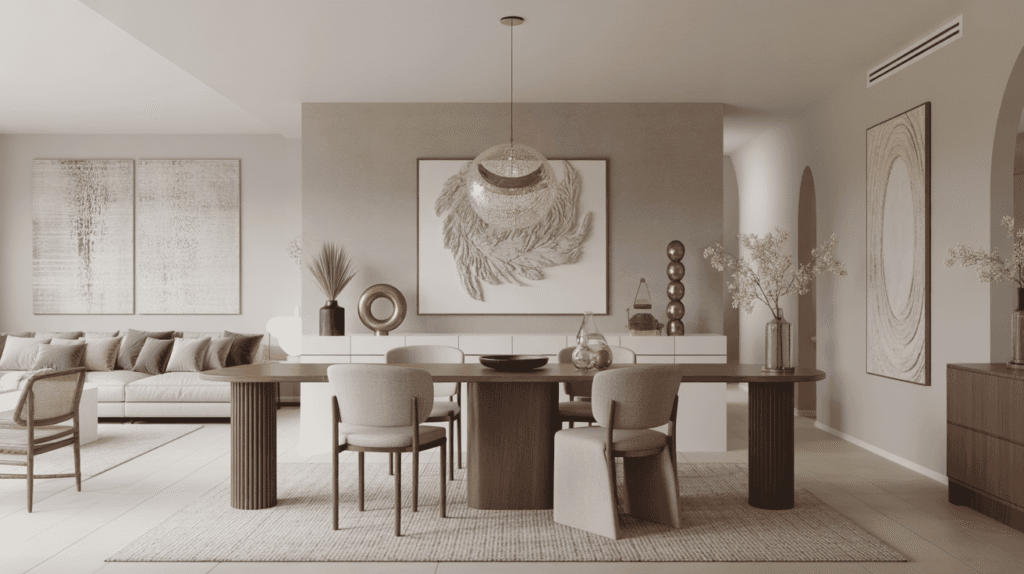
Statement décor pieces bring personality and character to an open layout living room and dining room without overwhelming the space. Large wall art, sculptural vases, decorative mirrors, or a bold centerpiece on the dining table can act as focal points that tie both areas together.
Choose décor that reflects a similar style or material to maintain harmony while adding depth and interest. Thoughtfully placed statement pieces elevate the design, making the open layout feel stylish, curated, and complete.
Final Thoughts
Open layout living and dining rooms bring a natural sense of flow that makes a home feel more spacious, connected, and inviting. By removing visual barriers, these designs improve comfort, encourage social interaction, and allow natural light to move freely throughout the space. The seamless transition between living and dining areas also enhances visual appeal, creating a balanced and modern look that suits both everyday living and entertaining. Overall, open layouts support a flexible lifestyle while adding style, functionality, and long-term value to the modern home.